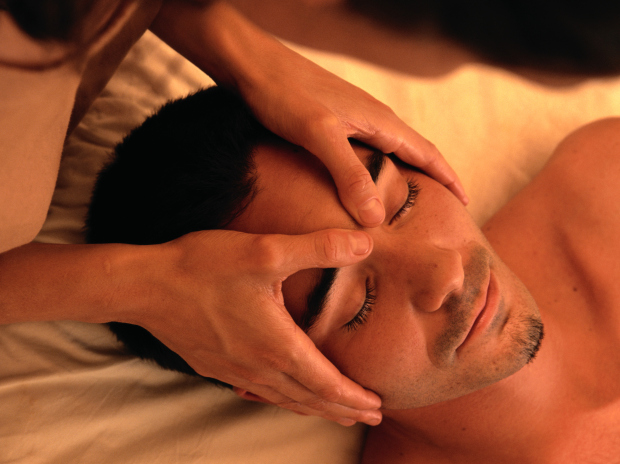
I am entering my fifth year of doing Myofascial Bodywork. What began as an impulse to learn another technique to use in my massage practice, quickly developed into a new understanding of, and appreciation for, the role of fascia in the body. Under the tutelage of John Barnes (and, to a lesser extent, Tom Myers), I came to see that doing myofascial work was an entirely distinct manner of working with the tissue of the body. As my hands became experienced at working with the fascial tissue, the...
I am entering my fifth year of doing Myofascial Bodywork. What began as an impulse to learn another technique to use in my massage practice, quickly developed into a new understanding of, and appreciation for, the role of fascia in the body. Under the tutelage of John Barnes (and, to a lesser extent, Tom Myers), I came to see that doing myofascial work was an entirely distinct manner of working with the tissue of the body. As my hands became experienced at working with the fascial tissue, they lost their desire to do Swedish massage.
Now I would explain, when asked about myofascial bodywork, that it seeks to create change in the collagen fiber of the fascia. The collagen is responsible to hold our basic shape, and it does not change just because it is pushed or pulled from an outside source (as in a typical massage). If we want to change the holding pattern locked into the collagenous aspect of the body's tissue, we need to use an approach other than Swedish or deep tissue massage.
To be specific, we put a slight pull into the tissue and hold it steadily over time -- the usual standard is 90 to 120 seconds, minimum. I have trained my hands to hold beyond the feel of the elastin fiber stretching out; waiting beyond that, one comes into a more subtle shift happening within the tissue. John Barnes describes this feeling of release as "the feeling of butter melting." The collagen fiber is quite literally reshaping itself in the body, releasing its holding pattern and creating a new scaffolding to support the structure and movement of the body.
So myofascial work, from my perspective, is not just another tool in the massage therapist's toolbox. It is a fundamentally different way of working with the tissue of the body.
We find that restrictions in the fascial network -- perhaps a holding pattern which has developed due to trauma or repetitive use -- will pull the bones of the skeleton out of alignment. Maybe the shoulders are rotated a bit, or one side is raised up and the other down. Even a small imbalance will have ramifications throughout the whole body. It is all one connected system. With misalignment, tissue that was meant to glide past neighboring tissue finds itself bumping or rubbing instead. Then some inflammation develops, and eventually presses up against some pain-sensitive structures.
Another way of thinking about the fascia: think of it as a sleeve which surrounds muscle tissue. If the sleeve is being pulled tighter, then you could have muscle tissue which contracts but the sleeve closes around it in this contracted state and prevents the muscle from extending back to its neutral position.
At a more practical level, issues in the fascial network are often involved in conditions such as fibromyalgia, carpal tunnel syndrome, TMJD, plantar fasciitis, chronic back pain, sciatic issues. Myofascial bodywork is a relatively gentle form of therapy that can help resolve the symptoms of these painful conditions. It also provides a profoundly relaxing experience.
I now see clients in two regions: the Capital District of New York State (at studios in Albany, Troy and Schenectady), and just outside Chagrin Falls in northeast Ohio. I named my business Good Medicine because bodywork is good medicine.